



Introduction
The transition from static websites to high-performance digital ecosystems is no longer a luxury. It is a fundamental requirement for business growth in today’s fast-paced market.
Today, a company’s web architecture determines its ability to scale and protect user data. It is the core engine that delivers seamless experiences across global markets.
Choosing the Best Frameworks for Web Development is the most critical decision a business owner can make. The wrong choice becomes a bottleneck, while the right choice acts as a strategic growth engine.
In this guide, we dive deep into the modern frameworks shaping the web development landscape. We break down complex technical choices into clear, actionable business insights.
What is a Web Development Framework?
Think of a web development framework as the ready-made foundation for your digital house. It provides the essential structure so you don’t have to build every single brick from scratch.
In simple terms, it is a collection of pre-written code that handles common tasks like data management and security. This allows your development team to focus on the unique features that make your business special.
Instead of spending weeks on “basic plumbing,” your developers can dive straight into the creative work. This results in faster launch times and a much more polished final product for your users.
There are two primary categories you need to understand: Frontend and Backend.
The frontend handles everything your customers see and click, while the Backend manages the hidden logic and the database.
Best Frontend Frameworks for Web Development
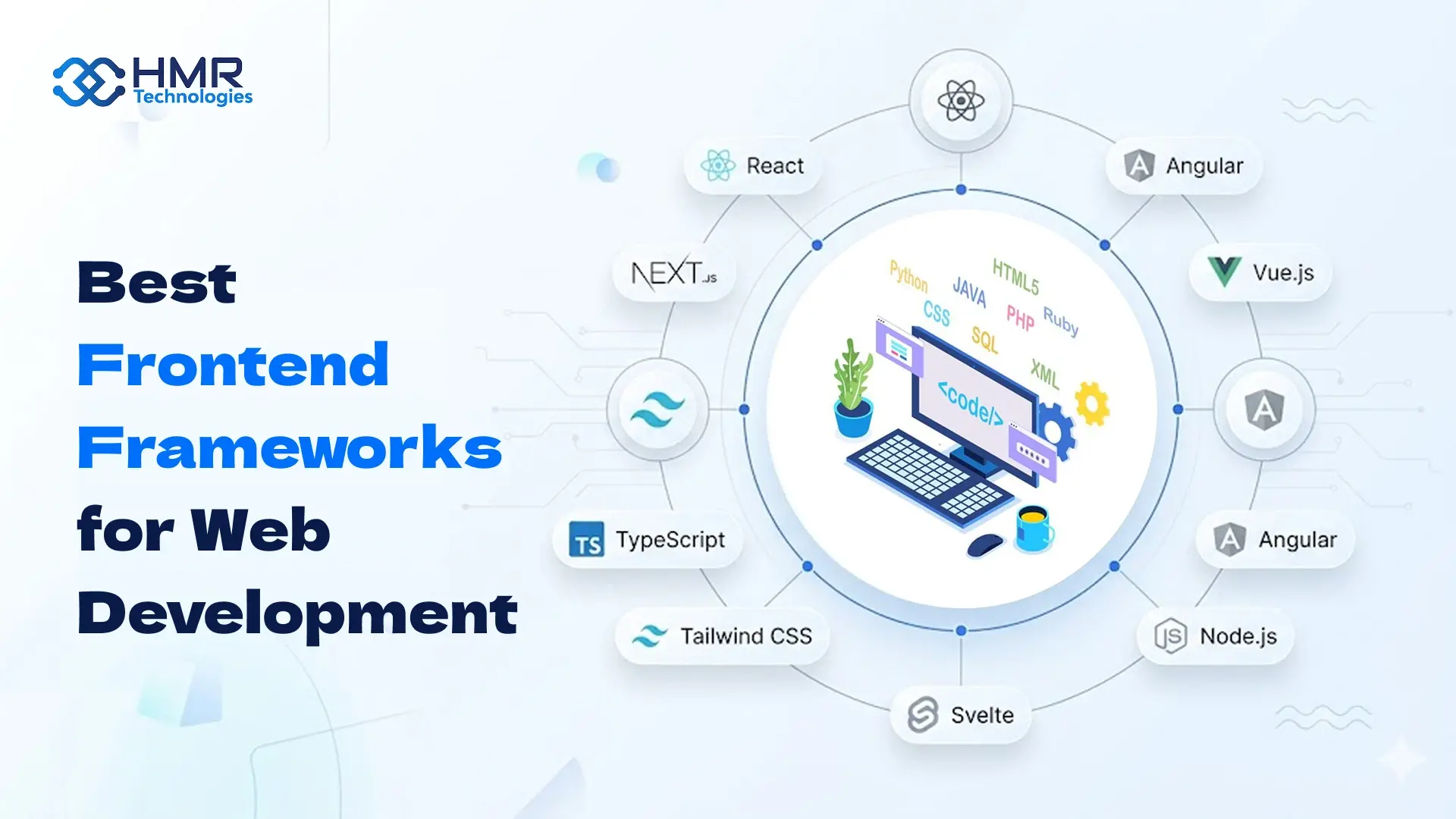
The frontend is the visual and interactive layer of your website. The focus has shifted from simple layouts to AI-native performance and lightning-fast user experiences.
Here are the top tools that are currently leading the enterprise application development trends for the frontend:
1. React
React remains the most trusted choice for global businesses because of its massive ecosystem and flexibility. Over the years, it has evolved from a simple library into a powerful engine that can handle virtually any enterprise software development need.
The new “React Compiler” has changed the game by automating performance optimization. This means your developers spend less time fixing slow code and more time building features that your customers actually want.
From a business perspective, React offers the best ROI because it is easy to find expert developers. Businesses often invest in professional ReactJS development services to build scalable web applications and enterprise-grade platforms. Since industry giants like Meta and Airbnb use it, you can be sure that the technology will be supported and updated for years to come.
We recommend React for high-traffic e-commerce platforms and complex dashboards. It provides a perfect balance of speed, community support, and long-term stability that is hard to beat.
2. Angular
Angular is the gold standard for large-scale, mission-critical applications. Unlike other frameworks, it provides a “strictly typed” and organized structure that is perfect for massive teams working on the same project.
Angular is more efficient than ever, thanks to its modern “Signals” feature. This technology allows the framework to update only the specific parts of the page that change, resulting in a much faster experience for the end user.
For industries like banking, healthcare, and government, Angular’s built-in security features are a massive advantage. Many organizations rely on professional AngularJS development services to build secure, scalable, and enterprise-grade applications.
If you are building a system that needs to last for decades without a complete rebuild, Angular is a safe bet. It offers a level of professional structure that ensures your software remains manageable even as it grows in size.
3. Vue.js
Vue.js has built a strong reputation for being incredibly easy to learn without sacrificing technical power. It is the perfect choice for businesses that want to launch a sophisticated digital product in a shorter timeframe.
The framework is famous for its “gentle” learning curve, which allows your development team to stay agile. It doesn’t force complex rules on you, making it ideal for custom business website development where flexibility is key.
Vue’s performance is on par with the fastest tools in the market. It is lightweight and handles real-time updates beautifully, making it a favorite for startups and mid-sized companies that need to move fast.
We often suggest Vue for companies that value developer productivity and clean code. It provides a polished, professional experience while keeping your development costs under control.
4. Ember.js
Ember.js is designed for those who value stability above everything else. It follows a philosophy called “Convention over Configuration,” which means there is a standard way to do everything, reducing the risk of messy code.
While it may not be the most “trendy” framework, it is one of the most reliable for enterprise application development. Many massive platforms that we use daily still rely on Ember because it handles complex data structures with ease.
Ember continues to be a favorite for long-term projects. It provides a clear upgrade path, so you never feel “stuck” on an old version of the software. This predictability is a huge win for business budgeting and planning.
If your goal is to build a massive, data-heavy application that multiple teams will manage over the next 10 years, Ember is a wise choice. It prioritizes the “health” of your code over short-term gimmicks.
5. Svelte
Svelte is redefining what “speed” means in 2026. Unlike other frameworks that do the hard work in the user’s browser, Svelte does the job during the build process. This results in the fastest possible load times.
From an SEO perspective, Svelte is a powerhouse. Because the file sizes are tiny, your website will score perfectly on Google’s Core Web Vitals. Leads to higher search rankings and a much better conversion rate for mobile users.
For businesses, Svelte means fewer server costs and happier customers. A site that loads instantly feels more professional and trustworthy, which is essential for building a global brand in a competitive market.
We recommend Svelte for projects where performance is the number one priority. If you want a cutting-edge, mobile-first experience that feels as smooth as a native app, Svelte is the framework of the future.
Best Backend Frameworks for Web Development
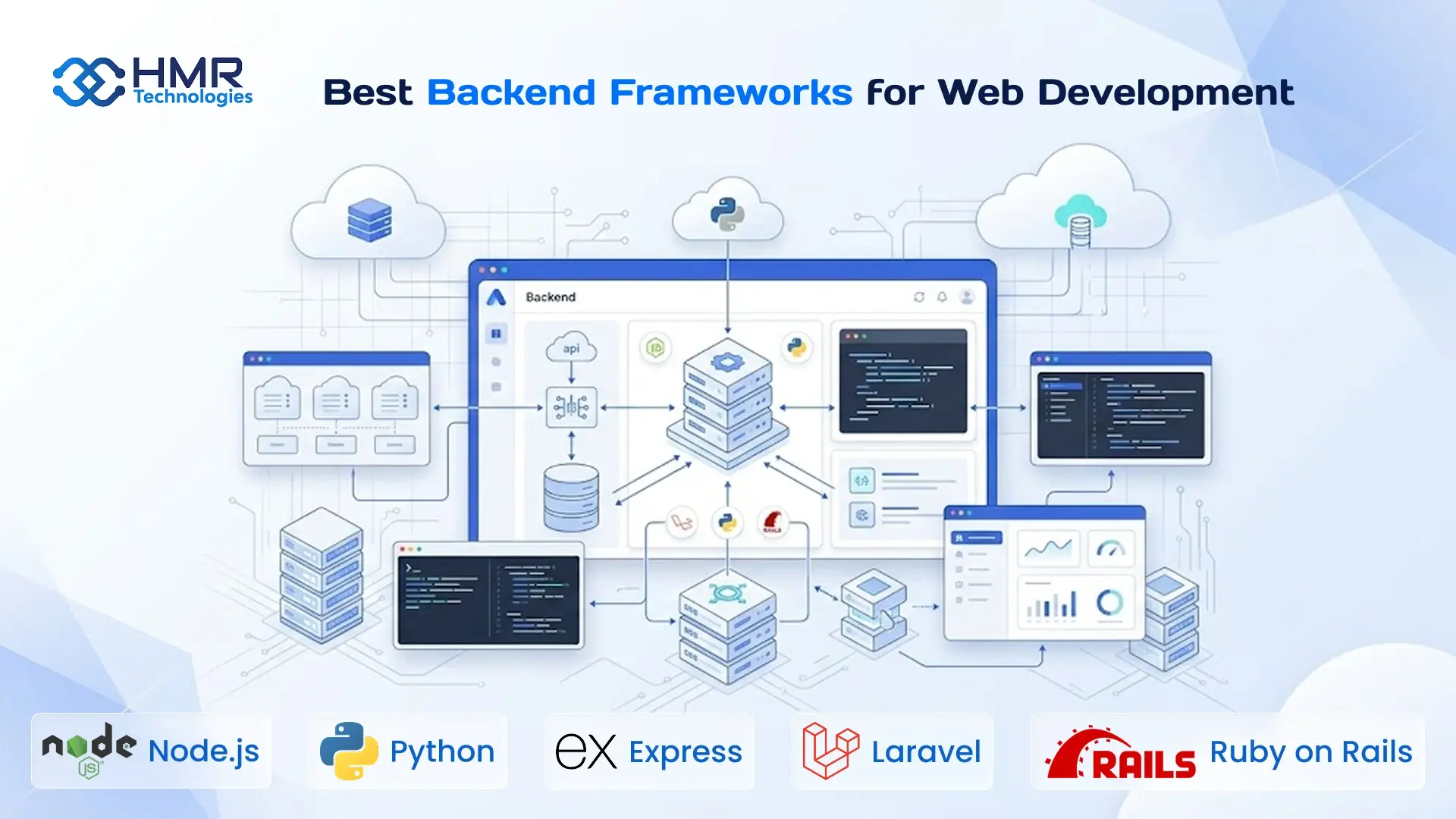
While the frontend is the face of your business, the backend is the engine and the brain. A strong backend is essential for handling complex data, ensuring high-level security, and keeping your operations running without a single second of downtime.
Choosing the right backend framework is a core part of custom software development. Below is a deep dive into the top frameworks that are helping global businesses scale effectively.
1. Node.js
Node.js has transformed from a trending tool into a foundational pillar of modern web development. It allows developers to use JavaScript for both the frontend and the backend, which creates a very smooth and fast development process for your team.
Its “non-blocking” architecture is more valuable than ever. This technology allows your server to handle thousands of requests at the same time without getting stuck. It is the perfect choice for real-time applications like chat systems, live dashboards, or collaborative tools.
From an enterprise perspective, Node.js is favored because it is incredibly lightweight. It allows businesses to use a “microservices” approach, where different parts of the software work independently.
It is highly recommended for companies that expect rapid growth. It provides the flexibility to start small and scale into a massive global platform while keeping your hosting costs efficient and manageable.
2. Python
Python is widely considered the most versatile language for the backend today. While it is a language, its frameworks, like Django and FastAPI, have become the gold standard for projects involving artificial intelligence and machine learning.
The biggest strength of Python development is its readability and its massive library of pre-built tools. This allows developers to integrate complex features like predictive search or automated customer insights directly into your business application with much less effort than other languages.
In terms of security, Python frameworks are exceptionally robust. They come with built-in protections against the most common cyber threats, making them a top choice for healthcare and financial institutions that handle highly sensitive customer data.
Using a Python-based backend is ideal if your project requires heavy data processing or smart automation. It ensures your software is not just a storage tool, but an intelligent asset that helps you make better business decisions through data.
3. Express
Express is a minimalist framework for Node.js that focuses on speed and freedom. It doesn’t force a specific structure on the developer, which makes it the fastest way to build custom APIs and lightweight web services.
Because it is so thin and fast, Express is a favorite for applications that prioritize performance above everything else. It allows for the creation of a custom backend that does exactly what you need without any unnecessary “bloat” or extra code that slows down your site.
For businesses looking to launch a Minimum Viable Product (MVP) quickly, Express is a lifesaver. It allows for rapid prototyping, meaning you can get your idea in front of customers in weeks rather than months, while still maintaining a professional level of code quality.
Express is often used when there is a need for a high-performance “gateway” between different pieces of software. It acts as a fast and reliable bridge, ensuring that data moves across your digital ecosystem without any lag or errors.
4. Laravel
Laravel has remained the most popular PHP framework for years because it prioritizes developer productivity and elegant code. It is the leading choice for projects that require a lot of custom features like user portals and payment systems.
What makes Laravel stand out is its “batteries-included” approach. It comes with built-in tools for handling databases, sending emails, and managing user authentication. This saves your development team hundreds of hours, allowing them to focus on the unique parts of your business logic.
From a reliability perspective, Laravel is incredibly solid. It follows strict security standards and is supported by a massive global community. This means your software will always have access to the latest security patches and feature updates, keeping your business future-proof.
If you are looking for a backend that is powerful, easy to maintain, and cost-effective, Laravel is often the best choice. It is perfect for e-commerce platforms and content-rich websites that need a professional, polished backend.
5. Ruby on Rails
Ruby on Rails (RoR) is famous for its “Convention over Configuration” philosophy. This means the framework has a standard way of doing things, which eliminates the need for developers to spend time making basic setup decisions.
RoR is a favorite for startups and growing enterprises because it allows for incredible speed. You can build complex features in a fraction of the time it would take in other frameworks. This makes it a highly efficient choice where time-to-market is critical.
Despite being an established framework, it has evolved beautifully. It powers some of the world’s biggest platforms, proving that it can handle massive scale and complex global transactions without breaking a sweat.
It is recommended for businesses that need to move fast and change often. Its organized structure ensures that even as you add more developers to your team, everyone stays on the same page, keeping your development costs predictable and your code clean.
How to Choose the Best Framework for Web Development in Your Project
Choosing a framework is about finding the tool that aligns with your business goals, budget, and long-term vision. To make the right choice, you need to evaluate a few key factors.
Define the Scale of Your Project:
Start by looking at your project’s size. For a quick MVP, use lightweight tools like Svelte or Express. For massive enterprise systems, choose structured options like Angular or Django.
Prioritize SEO and Performance:
If organic traffic is your priority, pick frameworks that support Server-Side Rendering like Next.js. For highly interactive dashboards, React or Vue.js offer the smoothest experience.
Check for Community Support:
Always choose frameworks with a large community. Popular tools like React and Laravel make it easier to find expert developers and pre-built solutions for common problems.
Focus on Security Needs:
If you handle sensitive data, prioritize security-first frameworks. Django is well-known for its built-in protections that save you from common cyber threats and data breaches.
Build Your Future-Ready Web Application with HMR Technologies
At HMR Technologies, we believe a website should be a powerful growth engine, not just a digital placeholder. We turn complex technical frameworks into high-performing business solutions for clients across the USA, Canada, and Europe.
We leverage the latest AI-accelerated tools to build your applications faster without compromising on quality. By using advanced coding assistants, we reduce time-to-market by nearly 40%, helping you stay ahead of the competition.
Performance is at the heart of everything we build. Every web application is optimized for 95+ Core Web Vitals scores to ensure your site is lightning-fast and loved by both users and search engines.
We bridge the gap between complex code and real-world results. Our goal is to ensure your technology acts as a bridge to your business success, providing a scalable foundation for the long term.
Conclusion
The framework you choose today is the foundation upon which your digital future is built. It determines how fast you can scale and how well you can protect your users’ data over time.
Whether you prioritize the speed of modern frontend tools or the robust security of a proven backend, your technology must work for you. Don’t let your tech stack become a barrier to your growth.
Ultimately, the best choice is the one that aligns with your specific business goals and long-term vision. Stay focused on delivering value to your users, and the right framework will help you achieve global success.



 June 15, 2026
 10 min read