




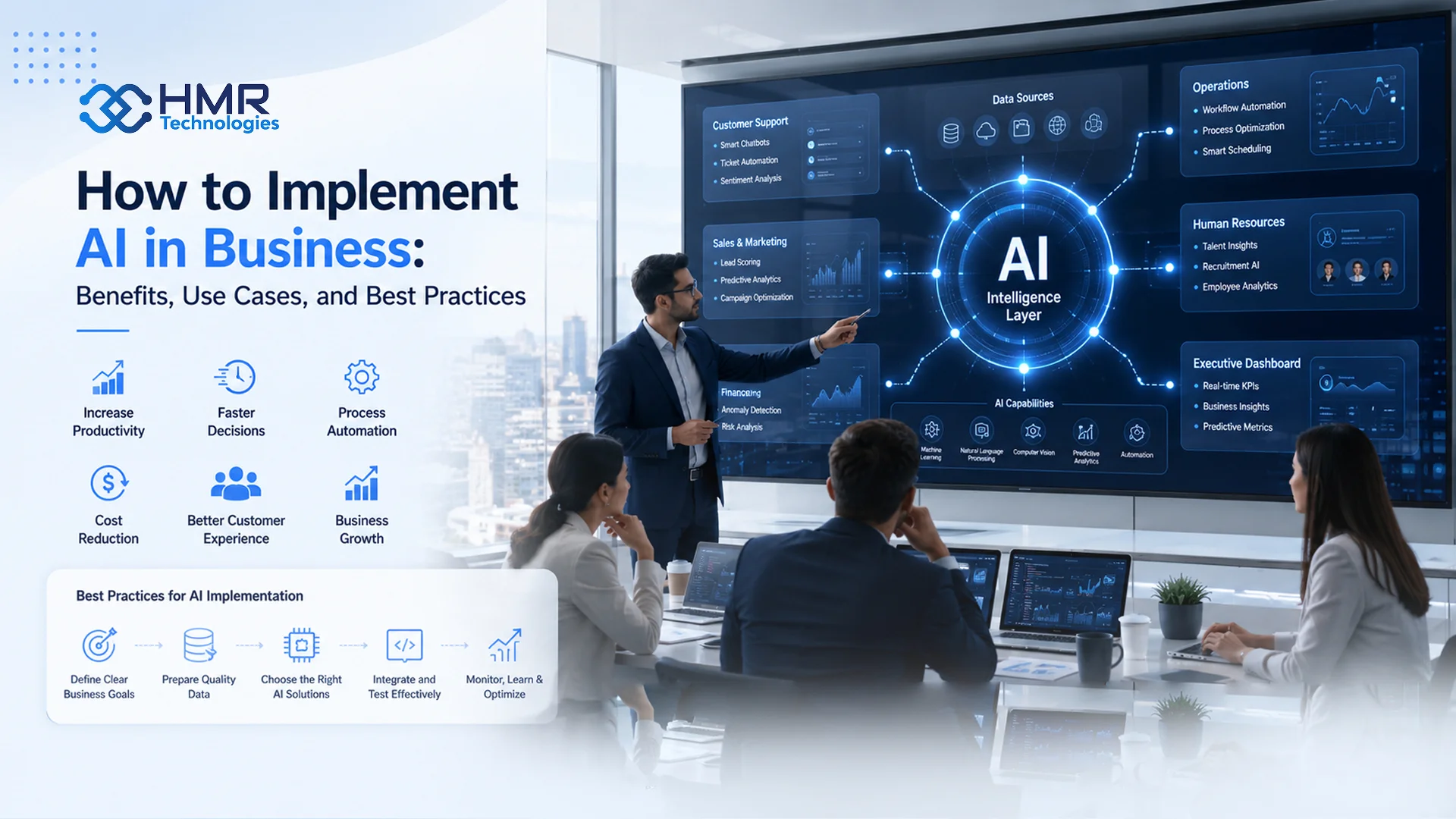
AI is everywhere right now.
Almost every week, a new tool, feature, or breakthrough makes headlines.
One platform can generate reports. Another can automate customer support. A third can analyze thousands of data points in seconds.
With so much happening, it’s easy to assume that implementing AI in a business is as simple as signing up for a tool and turning it on.
In reality, that’s where many businesses get stuck.
The technology itself isn’t usually the challenge. The bigger question is knowing where AI fits into your business, which problems it should solve first, and how to implement it in a way that delivers measurable results.
That’s why many businesses choose to work with an AI development company rather than navigating the process alone.
Some companies invest heavily in AI and struggle to see value. Others start with a single use case and quickly uncover opportunities that improve efficiency, customer experience, and decision-making across the organization.
The difference often comes down to having the right implementation strategy and a well-defined AI business strategy.
In this guide, we’ll look at how to implement AI in business, the benefits organizations can expect, common use cases across different departments, and the best practices that help turn AI initiatives into long-term business value.
What Does AI Implementation in Business Mean?
Before discussing the benefits or implementation process, it’s important to understand what AI implementation in business actually means.
Simply put, it refers to integrating artificial intelligence into business operations, products, or workflows to improve efficiency, automate tasks, and support better decision-making.
Many people assume AI implementation means building complex machine learning models from scratch. In reality, most businesses start much smaller.
For example, a company might use AI to automate customer support, improve sales forecasting, analyze customer behavior, or streamline internal processes. The objective isn’t to adopt AI for the sake of technology. It’s to solve a specific business problem more effectively.
That’s what separates successful AI initiatives from unsuccessful ones.
Rather than focusing on the technology itself, businesses should focus on the outcomes they want to achieve. Whether the goal is reducing operational costs, improving customer experiences, or increasing productivity, AI should support a clear business objective.
This is why enterprise AI implementation is often viewed as a business strategy rather than a technology project. The organizations seeing the best results are the ones that align AI investments with measurable business goals from the start.
Why AI Has Become a Business Priority
Not long ago, AI was something most businesses watched from a distance. It was expensive, complex, and often associated with large enterprises that had the resources to experiment with emerging technologies.
That’s no longer the case. Today, businesses of all sizes are using AI to automate routine tasks, analyze data, improve customer experiences, and support faster decision-making. What was once considered a competitive advantage is quickly becoming a business necessity, driven by [emerging enterprise AI trends] (https://www.hmrtechnologies.com/blog/ai-enterprise-software-development-trends) across industries.
Part of the reason is accessibility. Cloud platforms, pre-built AI models, and AI consulting services have made adoption far more practical than it was a few years ago. Businesses no longer need massive budgets or dedicated research teams to start exploring AI opportunities.
The bigger reason, however, is business pressure. Customers expect personalized experiences, teams are expected to do more with fewer resources, and organizations are generating more data than ever before. AI helps businesses respond to these challenges by improving efficiency, uncovering insights, and enabling faster decisions.
As a result, AI is increasingly becoming a business priority rather than a technology initiative.
Key Benefits of AI Implementation for Businesses
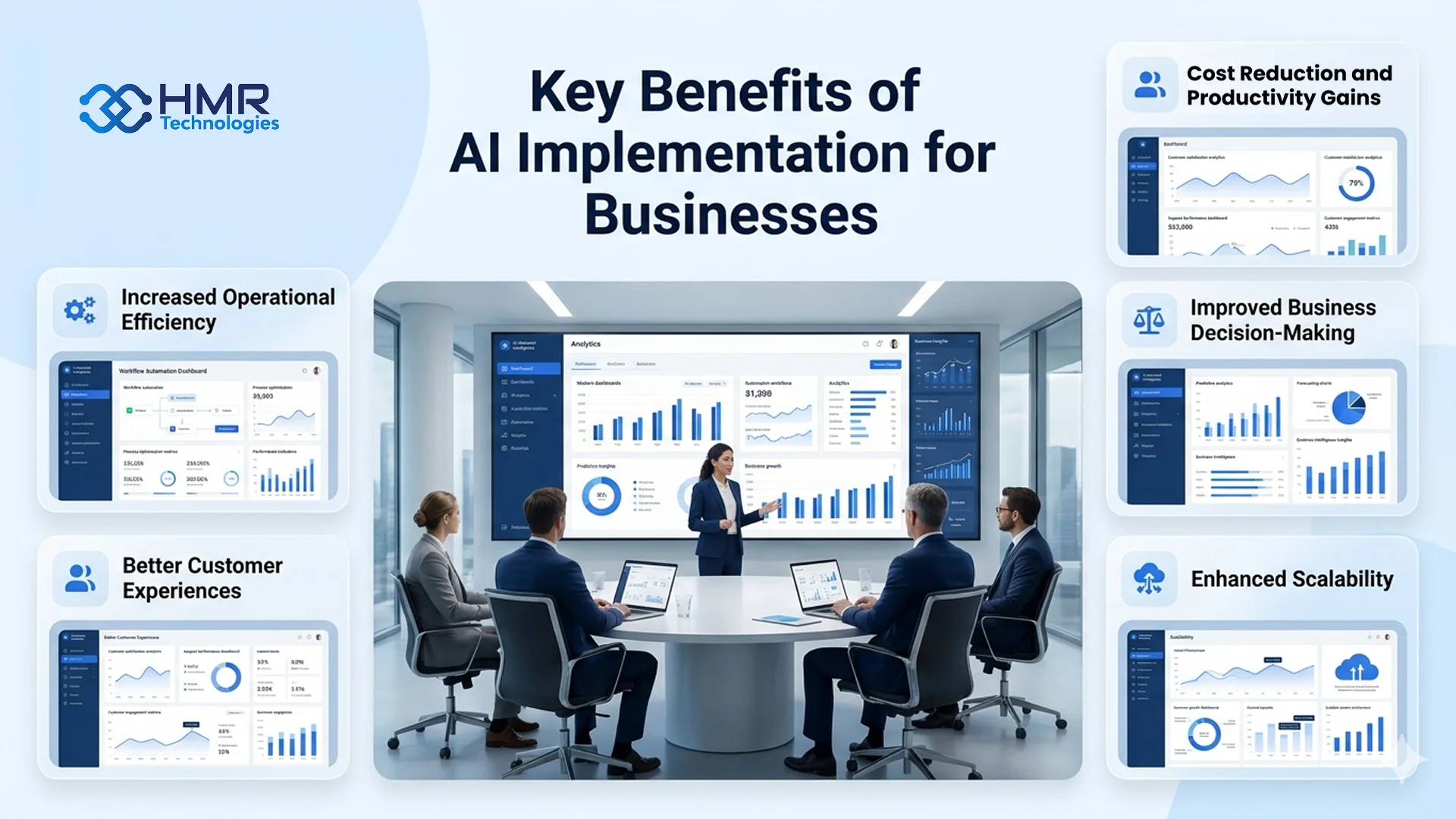
Businesses adopt AI to improve efficiency, enhance customer experiences, make better use of data, and drive measurable business value. When implemented effectively, AI can streamline operations, reduce costs, improve decision-making, and support business growth. Here are some of the key benefits of AI implementation.
Increased Operational Efficiency
Operational efficiency is often one of the first areas where businesses see results from AI implementation. Many organizations spend significant time on repetitive tasks such as data entry, reporting, scheduling, and customer support activities.
Through business process automation, AI can handle these routine workflows faster and more accurately. This allows employees to spend less time on administrative work and focus on higher-value activities that contribute to business growth.
Better Customer Experiences
Customers increasingly expect fast responses, personalized interactions, and consistent experiences across multiple channels. Meeting those expectations can become challenging as customer volumes increase.
AI helps businesses analyze customer behavior and deliver more relevant experiences. Tools such as chatbots and virtual assistants can also provide instant support, improving customer satisfaction while reducing pressure on support teams.
Improved Business Decision-Making
Businesses generate large amounts of data every day, but turning that data into meaningful insights is often the real challenge.
AI can analyze information quickly, identify trends, and uncover opportunities that might otherwise be overlooked. This helps business leaders make faster, more informed decisions based on data rather than assumptions.
###Cost Reduction and Productivity Gains
Reducing operational costs is a priority for most organizations, especially as they scale. AI helps achieve this by automating repetitive work and improving process efficiency.
At the same time, employees can focus on strategic initiatives instead of routine tasks. The result is often a combination of lower costs, improved productivity, and better overall business performance.
Enhanced Scalability
As businesses grow, managing larger workloads becomes increasingly complex. Traditional processes that work for smaller teams often struggle to keep pace with expansion.
AI helps organizations scale more efficiently by handling larger volumes of data, transactions, and customer interactions without requiring proportional increases in resources. This makes growth more manageable and sustainable over time.
How to Implement AI in Business: A Step-by-Step Approach
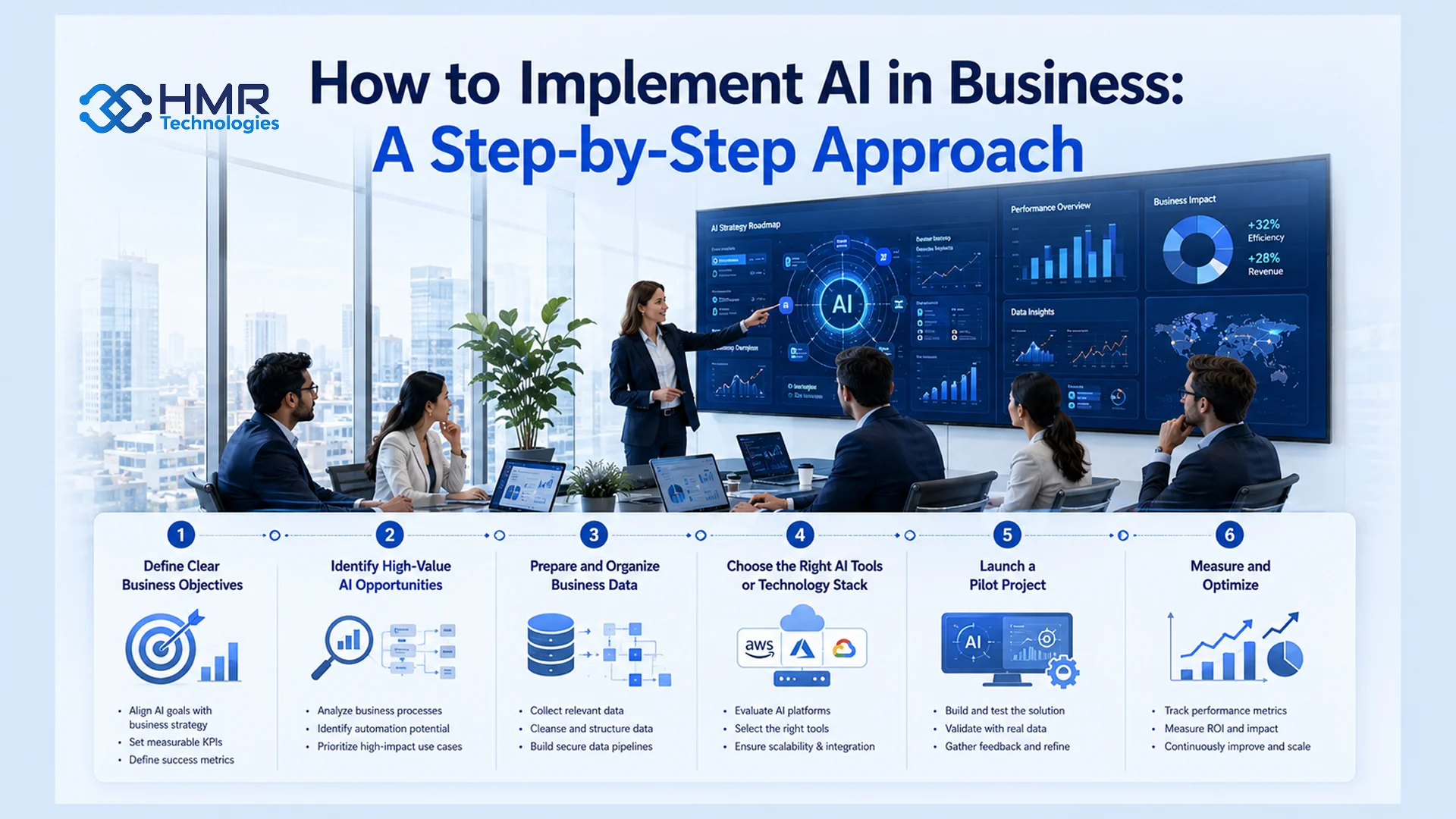
Many businesses recognize AI’s potential but struggle with implementation and developing an effective AI business strategy. Success starts with a clear strategy, not just choosing a tool. The following steps can help businesses adopt AI effectively and achieve measurable results.
Define Clear Business Objectives
The first step is identifying what you want AI to achieve.
Many AI projects fail because businesses focus on technology before defining the problem they’re trying to solve. Instead of asking, “How can we use AI?” start by asking, “What business challenge are we trying to address?”
Your objective might be reducing customer support response times, improving sales forecasting, automating internal processes, or increasing operational efficiency. Clear goals provide direction and make it easier to measure the success of your AI initiative.
Identify High-Value AI Opportunities
Once objectives are defined, the next step is identifying where AI can create the greatest impact.
Not every process needs AI. The most successful projects often focus on areas that involve repetitive work, large volumes of data, or decision-making that can benefit from predictive insights.
For example, businesses frequently begin with customer support automation, lead scoring, demand forecasting, or workflow automation. Starting with a high-impact use case helps demonstrate value early and builds confidence for future AI investments.
Prepare and Organize Business Data
AI systems are only as effective as the data they use.
Before implementing any solution, businesses should evaluate the quality, accuracy, and accessibility of their data. Incomplete, outdated, or inconsistent information can limit the effectiveness of AI models and lead to unreliable results.
This stage often involves cleaning datasets, removing duplicates, standardizing information, and establishing proper data governance practices. A strong data foundation significantly improves the chances of a successful implementation.
Choose the Right AI Tools or Technology Stack
With objectives and data in place, businesses can begin evaluating technology options.
The right solution depends on your goals, budget, technical requirements, and scalability needs. Some organizations may benefit from pre-built AI platforms, while others require custom AI solutions tailored to business needs and specific business processes.
Businesses with unique requirements often partner with an AI development company to build and implement solutions that align with their operational goals. The focus should be on selecting technology that supports long-term business needs rather than short-term trends.
Launch a Pilot Project
Rather than deploying AI across the entire organization immediately, start with a pilot project.
A smaller implementation allows businesses to validate assumptions, measure performance, and identify potential challenges before making larger investments. It also provides valuable feedback from employees and stakeholders who will ultimately use the solution.
Pilot projects reduce risk while creating a clear roadmap for broader adoption if the initial results are successful.
Measure and Optimize
AI implementation doesn’t end after deployment.
To maximize long-term value, businesses should continuously monitor performance and measure outcomes against their original objectives. This includes tracking operational improvements, cost savings, productivity gains, and customer experience metrics.
The insights gathered during this stage can help refine models, improve accuracy, and uncover new opportunities for expansion. Organizations that treat AI as an ongoing improvement process often achieve better results than those that view it as a one-time project.
Common Challenges Businesses Face During AI Adoption
While AI offers significant benefits, implementation isn’t always straightforward.
One of the most common challenges is data quality. AI systems rely on accurate and well-structured data, and poor-quality information can lead to unreliable results.
Integration is another obstacle. Many businesses still use legacy systems that were not designed to support modern AI technologies, making implementation more complex than expected.
Organizations also face adoption challenges. Employees may be hesitant to trust AI-driven processes or adapt to new ways of working without proper training and support.
Cost expectations can create difficulties as well. While AI is more accessible than ever, successful implementation still requires AI development investment and implementation costs related to technology, data preparation, and ongoing optimization.
Businesses can also follow established AI risk management practices to improve implementation success. Businesses that start with clear objectives, realistic expectations, and a structured implementation plan are far more likely to achieve successful outcomes.
Real-World AI Use Cases Across Business Functions
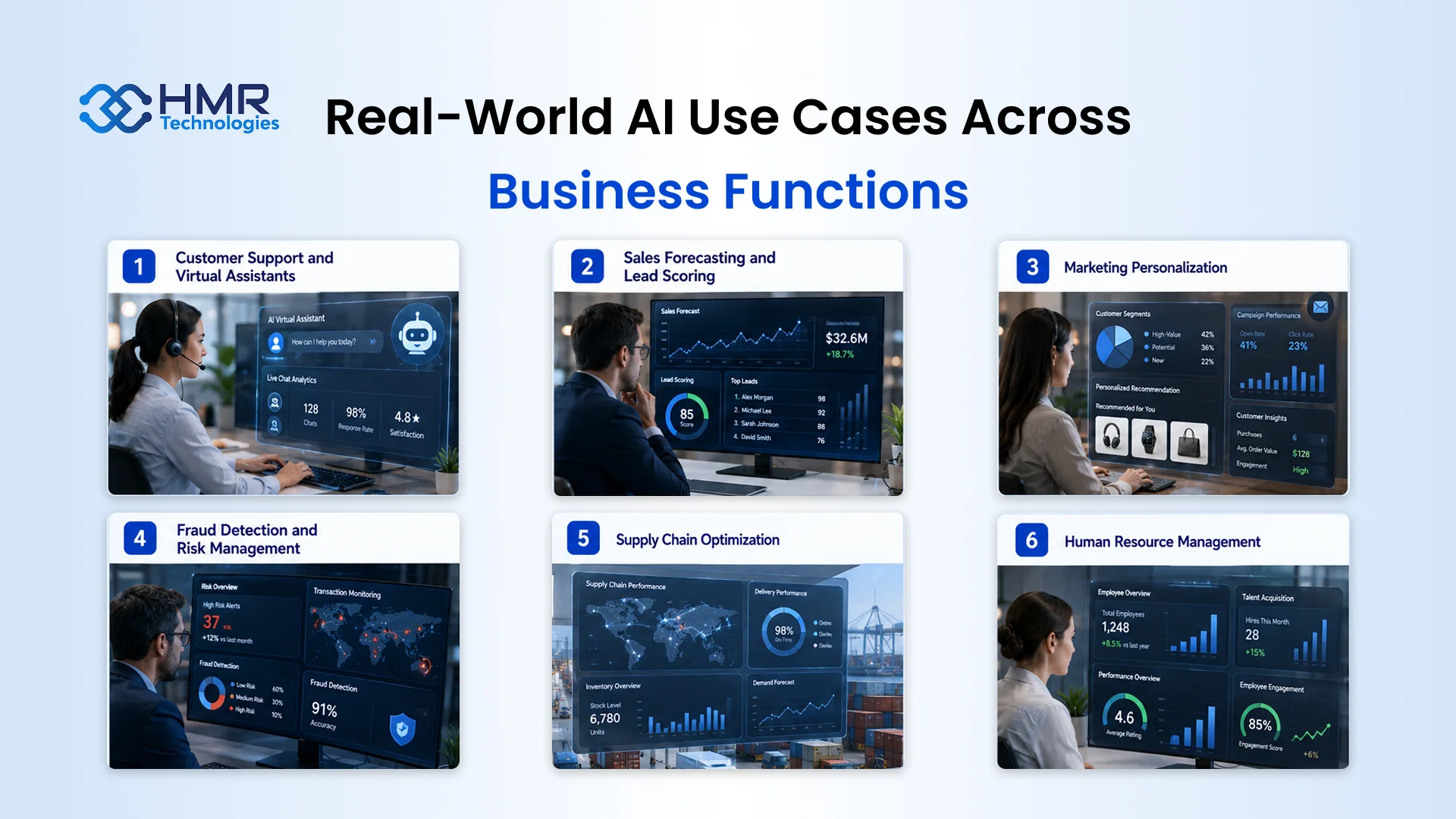
AI is no longer limited to a specific department or industry. Businesses are using it across multiple functions to improve efficiency, enhance customer experiences, and make more informed decisions. Here are some of the most common real-world applications of AI in modern organizations.
Customer Support and Virtual Assistants
AI-powered chatbots and virtual assistants help businesses provide instant support, answer common customer questions, and resolve routine issues around the clock. This reduces response times, improves customer satisfaction, and allows support teams to focus on more complex inquiries.
Sales Forecasting and Lead Scoring
Sales teams use AI to analyze historical data, customer behavior, and market trends to predict future sales performance. AI can also identify high-potential leads, helping sales representatives prioritize opportunities and improve conversion rates.
Marketing Personalization
AI enables businesses to deliver personalized experiences by analyzing customer preferences, browsing behavior, and purchase history. This helps marketers create targeted campaigns, recommend relevant products, and improve engagement across different channels.
Fraud Detection and Risk Management
Financial institutions, eCommerce businesses, and insurance providers use AI to identify unusual patterns and detect potentially fraudulent activities in real time. This allows organizations to reduce financial risks while improving security and compliance efforts.
Supply Chain Optimization
AI helps businesses forecast demand, manage inventory levels, and optimize logistics operations. By analyzing large volumes of operational data, organizations can reduce delays, minimize waste, and improve overall supply chain efficiency.
Human Resource Management
HR teams use AI to streamline recruitment, screen candidates, analyze employee data, and support workforce planning. These capabilities help organizations make more informed hiring decisions while improving overall talent management processes.
How Can HMR Technologies Help You Implement AI in Your Business?
Implementing AI successfully requires more than choosing the right technology. Businesses need a clear strategy, reliable data, the right development expertise, and a roadmap that aligns AI initiatives with business objectives.
At HMR Technologies, we help organizations identify practical AI opportunities and turn them into scalable solutions that deliver measurable results. Whether you’re looking to automate business processes, improve customer experiences, build AI-powered applications, or gain deeper insights from your data, our team works closely with you to develop solutions tailored to your specific requirements.
Our AI development services cover the entire implementation journey from strategy and consulting to development, integration, deployment, and ongoing optimization. We focus on building AI solutions that solve real business challenges while supporting long-term growth and innovation.
With access to dedicated AI developers and engineers, businesses can adopt AI with confidence and maximize implementation success. and maximize the value of their investment.
Conclusion
Artificial intelligence for business is no longer a future investment reserved for large enterprises. Businesses of all sizes are using it to automate processes, improve customer experiences, make better decisions, and uncover new growth opportunities.
The key to successful AI adoption isn’t starting with the most advanced technology, it’s starting with the right business problem. Organizations that define clear objectives, identify high-impact use cases, and take a structured implementation approach are far more likely to achieve meaningful results.
Whether you’re exploring AI for the first time or looking to expand existing initiatives, focusing on practical business outcomes will help maximize the value of your investment.
As AI continues to evolve, businesses that embrace it strategically will be better positioned to improve efficiency, stay competitive, and adapt to changing market demands. The sooner organizations begin building their AI capabilities, the sooner they can start realizing the benefits of a more intelligent and data-driven future.



 July 23, 2026
 10 min read