



Healthcare organizations are under constant pressure to do more with fewer resources. Patient volumes continue to grow, administrative workloads are increasing, and healthcare professionals spend a significant portion of their time on repetitive tasks instead of patient care.
Behind every patient interaction is a long list of administrative responsibilities, from clinical documentation and appointment scheduling to insurance verification, billing, and prior authorizations. While these tasks are essential to healthcare operations, they often consume valuable time that could otherwise be spent delivering care and improving patient outcomes.
Unlike basic chatbots or rule-based automation, AI agents for healthcare are designed to work across clinical, operational, and administrative processes. From scheduling appointments and automating clinical documentation to supporting medical coding and improving hospital operations, these intelligent agents are transforming how healthcare organizations deliver care and manage day-to-day activities.
Recent Deloitte research shows that 98% of U.S. healthcare leaders expect agentic AI investments to deliver at least 10% cost savings over the next two to three years, highlighting the growing confidence in AI agents to improve workforce efficiency, streamline operations, and enhance patient experiences
In this guide, we’ll explore the top AI agent use cases in healthcare, the benefits they deliver, implementation challenges to consider, and how organizations can successfully integrate agentic AI into their operations.
What Is Agentic AI in Healthcare?
Most AI applications respond to prompts or automate a single task. Agentic AI takes this a step further by enabling AI systems to plan, make decisions, interact with multiple tools, and complete complex workflows with limited human intervention.
In healthcare, this means AI agents can do much more than answer patient questions. They can retrieve information from electronic health records (EHRs), schedule appointments, verify insurance eligibility, generate clinical documentation, coordinate care across departments, and even trigger follow-up actions based on predefined rules.
Instead of functioning as standalone tools, AI agents work alongside healthcare professionals to streamline routine processes and reduce administrative overhead. They can securely access multiple systems, analyze real-time data, and execute tasks while keeping clinicians informed throughout the process.
As healthcare organizations adopt more connected digital ecosystems, technologies like Model Context Protocol (MCP) are also becoming increasingly important. MCP provides a standardized way for AI agents to communicate with enterprise systems, making it easier to integrate intelligent agents with EHR platforms, hospital management software, and other healthcare applications.
The result is a more connected and intelligent healthcare environment where clinicians spend less time navigating systems and more time focusing on patient care.
Why Healthcare Organizations Are Investing in AI Agents
Healthcare has always been data-intensive, but managing that data efficiently has become increasingly difficult. Hospitals, clinics, and healthcare providers work with patient records, insurance information, diagnostic reports, medical imaging, and regulatory documentation every day.
Many of these processes are still manual, time-consuming, and prone to delays.
AI agents help automate repetitive administrative work while supporting faster clinical and operational decision-making. Instead of replacing healthcare professionals, they reduce the time spent on routine activities so clinicians and staff can focus on delivering quality care.
Healthcare organizations are also facing growing challenges such as workforce shortages, rising operational costs, increasing patient expectations, and stricter compliance requirements. These pressures are encouraging providers to invest in intelligent automation that improves productivity without compromising patient safety.
Some of the primary reasons healthcare organizations are adopting AI agents include:
- Reducing administrative workloads for clinical and support staff
- Improving patient engagement through faster and more personalized interactions
- Automating documentation, billing, and insurance-related processes
- Supporting faster access to patient information across multiple systems
- Improving operational efficiency without significantly increasing staffing costs
- Enabling scalable digital healthcare services
For organizations developing long-term AI implementation strategies, AI agents represent a practical step toward building more intelligent, efficient, and patient-centric healthcare operations.
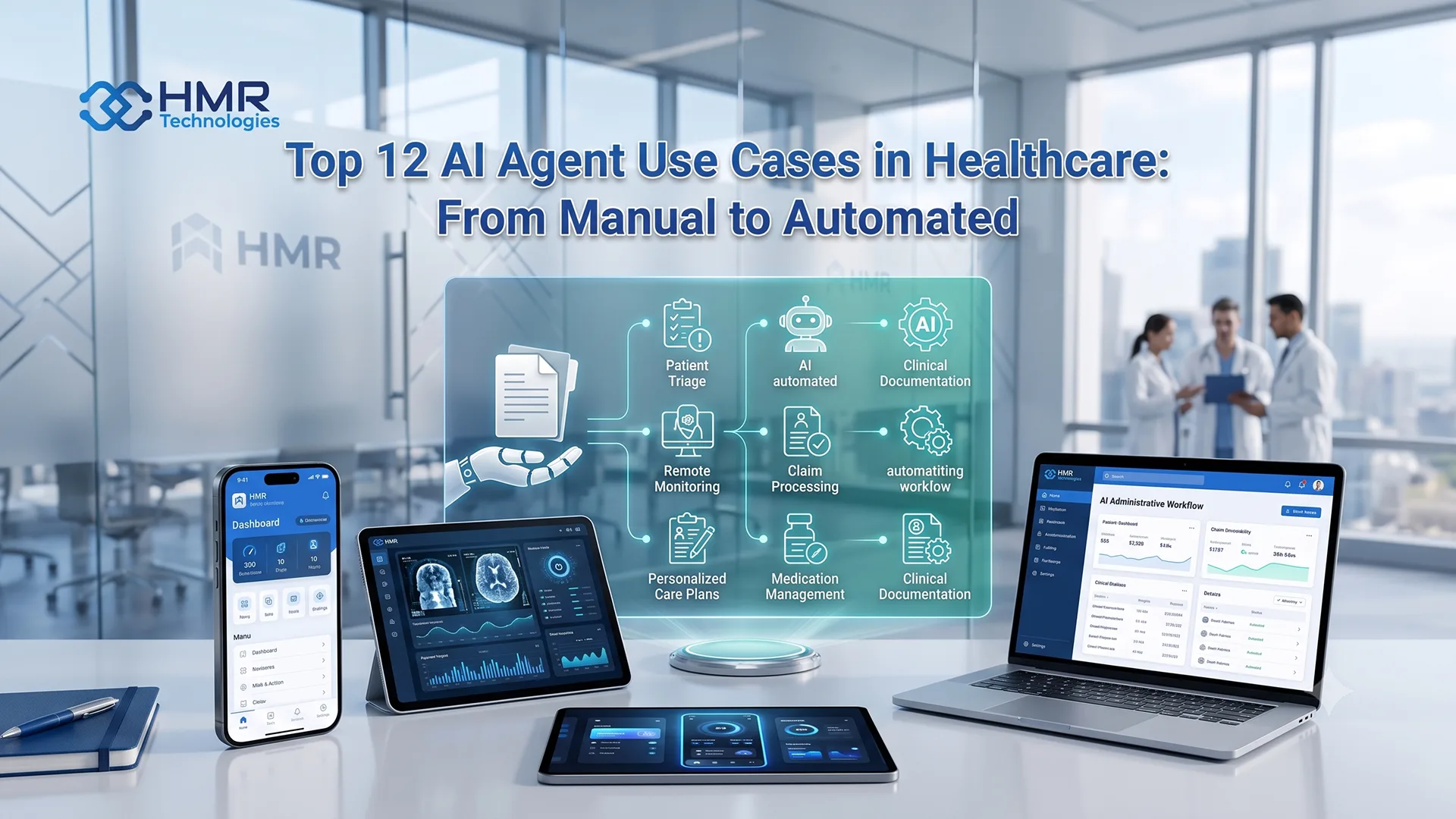
Best 12 Use Cases of AI Agents in Healthcare
AI agents automate complete workflows, understand context, interact with multiple systems, and make decisions with minimal human input. This helps healthcare organizations improve efficiency and patient care.
1. Intelligent Patient Appointment Scheduling
Scheduling appointments involves much more than selecting an available time slot. Staff often need to verify provider availability, patient preferences, appointment types, insurance eligibility, and follow-up requirements.
AI agents can automate the entire scheduling process by coordinating these activities across multiple systems. They can also send reminders, manage cancellations, recommend alternative time slots, and reduce missed appointments, improving both patient satisfaction and operational efficiency.
2. Clinical Documentation Automation
Clinical documentation is one of the most time-consuming administrative responsibilities for healthcare professionals.
AI agents can generate clinical notes from physician conversations, summarize patient encounters, organize medical records, and update Electronic Health Records (EHRs). This reduces documentation time while allowing clinicians to focus more on patient interactions instead of administrative work.
3. Prior Authorization Automation
Obtaining prior authorization often requires collecting medical records, verifying insurance policies, and communicating with multiple stakeholders.
AI agents can automate document collection, validate patient information, prepare authorization requests, and track approval status. This helps reduce processing delays while improving the overall patient experience.
4. Medical Coding and Billing Automation
Medical coding and billing require high levels of accuracy because even small errors can lead to claim denials or delayed reimbursements.
AI agents can analyze clinical documentation, recommend appropriate medical codes, identify missing information, and support billing teams throughout the reimbursement process. This improves coding accuracy while reducing administrative workload.
5. Virtual Patient Support Agents
Patients often have questions before and after appointments regarding medications, treatment plans, laboratory results, or follow-up care.
AI-powered virtual agents can provide instant responses, guide patients through common healthcare processes, schedule appointments, and escalate complex cases to healthcare professionals when needed. This improves accessibility while reducing the burden on support teams.
6. Revenue Cycle Management (RCM) Automation
Revenue cycle management involves multiple administrative processes, including patient registration, insurance verification, billing, payment tracking, and claims management.
AI agents can automate repetitive RCM workflows, identify billing issues earlier, and support faster reimbursements. This helps healthcare organizations improve cash flow while reducing manual administrative effort.
7. AI Agents for Remote Patient Monitoring
Remote patient monitoring continues to expand as healthcare providers support patients beyond traditional clinical settings.
AI agents can monitor connected medical devices, analyze patient data in real time, detect abnormal health patterns, and notify care teams when intervention may be required. This allows healthcare providers to respond more quickly while supporting proactive patient care.
8. Medical Imaging Assistance
Radiologists and clinicians often review thousands of medical images every week.
AI agents can assist by identifying potential abnormalities, prioritizing urgent cases, organizing imaging workflows, and providing preliminary analysis for clinician review. Rather than replacing medical experts, these systems help accelerate diagnosis and improve workflow efficiency.
9. Hospital Operations Optimization
Healthcare operations depend on the coordination of staff, equipment, facilities, and patient resources.
AI agents can optimize bed allocation, operating room scheduling, workforce planning, inventory management, and patient flow. By analyzing operational data continuously, they help hospitals improve resource utilization while reducing unnecessary delays.
10. Multi-Agent EHR Integration and Data Coordination
Healthcare organizations often work with multiple clinical and administrative systems that do not communicate efficiently with one another.
Using technologies such as Model Context Protocol (MCP), AI agents can securely coordinate information across Electronic Health Records, laboratory systems, pharmacy platforms, billing applications, and other enterprise healthcare solutions. This enables clinicians to access more complete patient information without manually switching between multiple systems.
11. Insurance Claims Processing
Insurance claims require validating patient information, reviewing documentation, checking policy compliance, and resolving missing data before submission.
AI agents can automate much of this process by reviewing claims, identifying potential errors, flagging missing information, and tracking claim status. This reduces manual effort while improving approval rates and reimbursement timelines.
12. Enterprise Knowledge Assistants for Healthcare Staff
Healthcare professionals frequently need quick access to clinical guidelines, hospital policies, treatment protocols, compliance documentation, and internal knowledge bases.
AI-powered enterprise knowledge assistants allow clinicians and administrative teams to retrieve accurate information through natural language conversations instead of manually searching multiple systems. Organizations building these intelligent assistants often invest in custom AI solutions that integrate securely with existing healthcare platforms and internal knowledge repositories.
Benefits of AI Agents for Healthcare Organizations
As healthcare organizations adopt AI agents across clinical and administrative workflows, the benefits extend far beyond automation. When implemented strategically, AI agents can improve efficiency, reduce operational costs, and help healthcare professionals spend more time delivering quality patient care.
Improved Operational Efficiency
Many healthcare processes involve repetitive manual tasks that slow down daily operations. AI agents automate routine workflows such as scheduling, documentation, billing, and insurance verification, allowing hospitals and clinics to complete tasks faster with greater accuracy.
Reduced Administrative Workload
Administrative work consumes a significant portion of clinicians’ and support staff’s time. AI agents reduce this burden by handling repetitive activities, enabling healthcare professionals to focus more on patient care instead of paperwork and manual data entry.
Better Patient Experiences
Patients expect faster responses, shorter wait times, and personalized communication throughout their healthcare journey. AI agents support these expectations by providing 24/7 assistance, automating appointment scheduling, sending reminders, and delivering timely updates, resulting in a more convenient patient experience.
Faster Decision-Making
AI agents can retrieve information from multiple healthcare systems, summarize patient records, and provide relevant insights in real time. This enables clinicians and administrative teams to make faster, more informed decisions without manually searching across multiple platforms.
Cost Optimization
By automating repetitive workflows and reducing manual effort, healthcare organizations can lower operational costs while improving productivity. Organizations following a structured AI implementation strategy are often able to achieve stronger returns on their AI investments while scaling automation more effectively.
Scalable Healthcare Operations
As patient volumes increase, healthcare providers need systems that can scale without proportionally increasing administrative overhead. AI agents help organizations handle larger workloads, coordinate workflows across departments, and support long-term digital transformation initiatives.
Challenges of Implementing AI Agents in Healthcare
While AI agents offer significant benefits, successful implementation requires careful planning. Healthcare organizations must address technical, regulatory, and operational challenges to ensure AI systems remain secure, reliable, and compliant.
Data Privacy and HIPAA Compliance
Healthcare organizations manage highly sensitive patient information, making data privacy a top priority. AI agents should follow strong security practices, support encryption, implement role-based access controls, and comply with regulations such as HIPAA and other applicable healthcare standards.
Integration with EHR and EMR Systems
Many hospitals operate multiple Electronic Health Record (EHR) and Electronic Medical Record (EMR) systems that were not originally designed to work together. Integrating AI agents with these platforms requires careful planning to ensure secure and reliable data exchange.
AI Governance
Organizations need clear governance policies that define how AI agents access information, make decisions, and interact with users. Establishing oversight mechanisms helps maintain accountability while reducing operational and compliance risks.
Regulatory Requirements
Healthcare is one of the most heavily regulated industries. AI solutions must comply with regional healthcare regulations, industry standards, and internal compliance policies throughout development and deployment.
Staff Training and Change Management
Successful AI adoption depends on more than technology. Healthcare professionals need proper training to understand how AI agents support their daily work, when human intervention is required, and how to use these systems effectively.
Model Accuracy and Human Oversight
AI agents should assist healthcare professionals rather than replace clinical judgment. Organizations should continuously monitor model performance, validate outputs, and maintain human oversight for high-impact clinical and operational decisions.
How HMR Technologies Helps Healthcare Organizations Build AI Agents
Building an AI agent involves much more than integrating a large language model. Healthcare organizations need solutions that are secure, compliant, scalable, and capable of working seamlessly with existing systems such as EHRs, EMRs, hospital management platforms, and third-party applications.
At HMR Technologies, we help healthcare providers design and develop intelligent AI agents tailored to their operational and clinical workflows. Our AI development services cover the entire development lifecycle—from strategy and architecture planning to AI model integration, testing, deployment, and ongoing optimization.
Whether you’re building a virtual patient assistant, automating clinical documentation, streamlining revenue cycle management, or developing enterprise knowledge assistants, our team focuses on creating custom AI solutions that solve real business challenges while meeting healthcare compliance requirements.
For organizations looking to accelerate development, our dedicated AI development team works as an extension of your in-house team, helping you build scalable AI solutions while reducing development timelines and technical complexity.
How Much Does It Cost to Build a Healthcare AI Agent?
The cost of building a healthcare AI agent depends on several technical and business factors. A simple virtual assistant designed to answer patient queries will have different development requirements than an enterprise AI agent integrated with EHR systems, medical imaging platforms, and multiple healthcare applications.
Some of the key factors that influence development cost include:
| Cost Factor | Impact on Development |
|---|---|
| AI Agent Complexity | More advanced workflows require additional development effort. |
| System Integrations | Connecting with EHR, EMR, billing systems, and third-party APIs increases complexity. |
| Compliance Requirements | HIPAA, GDPR, and healthcare security standards require additional implementation and testing. |
| AI Models and Infrastructure | Model selection, cloud infrastructure, and inference costs influence the overall budget. |
| User Roles and Permissions | Multi-role healthcare environments require more sophisticated access controls. |
| Deployment and Maintenance | Ongoing monitoring, updates, and model optimization contribute to long-term costs. |
Rather than focusing only on the initial investment, healthcare organizations should evaluate the long-term business value AI agents deliver through improved efficiency, reduced administrative costs, and better patient experiences.
If you’re planning an AI-powered healthcare solution, understanding the broader factors that influence AI app development cost can help you estimate budgets more accurately before starting your project.
Conclusion
Healthcare organizations are under increasing pressure to improve patient care while managing rising operational costs and growing administrative workloads. AI agents provide a practical way to address these challenges by automating repetitive processes, supporting clinical teams, and improving operational efficiency across the organization.
From appointment scheduling and clinical documentation to revenue cycle management and enterprise knowledge assistants, the potential applications of AI agents for healthcare continue to expand. When implemented thoughtfully, these intelligent systems allow healthcare professionals to spend less time on manual tasks and more time delivering quality care.
As technologies such as agentic AI continue to mature, healthcare providers that invest in secure, scalable, and well-integrated AI solutions will be better positioned to improve patient outcomes and support long-term digital transformation.


 July 2, 2026
 10 min read
-for-enterprise-AI-integration.webp)