



Introduction
In 2026, the global marketplace has fully transitioned to a mobile-first economy. For any growing company, having a mobile presence is no longer a choice; it is a vital necessity.
A mobile app acts as a digital bridge between your brand and your customers. It allows you to provide instant value, services, and support right in the palm of their hands.
Recent trends show that this shift is only accelerating. According to data on global mobile app downloads by segment, millions of new users are engaging with apps every day.
This surge in downloads across various industries highlights a massive opportunity. If your business is not accessible via a smartphone, you are likely losing customers to more tech-savvy competitors.
In this guide, we will explore everything about mobile app development for businesses . We will cover the types of apps, the development process, and how it can scale your revenue.
What is Mobile App Development for Businesses?
At its core, mobile app development is the process of creating software that runs on smartphones and tablets. However, for an organization, it is a strategic business asset.
It is much more than just writing lines of code. It involves deep market research, creating intuitive user interfaces, and ensuring high-level security for sensitive data.
Custom mobile app development services ensure that the tool you build fits your specific operational needs. Unlike generic software, a custom app is built to match your unique brand identity and goals.
By focusing on your specific niche, a custom app can solve problems that “off-the-shelf” solutions cannot. It streamlines your workflow and offers a better experience for your end users.
Types of Mobile App Development
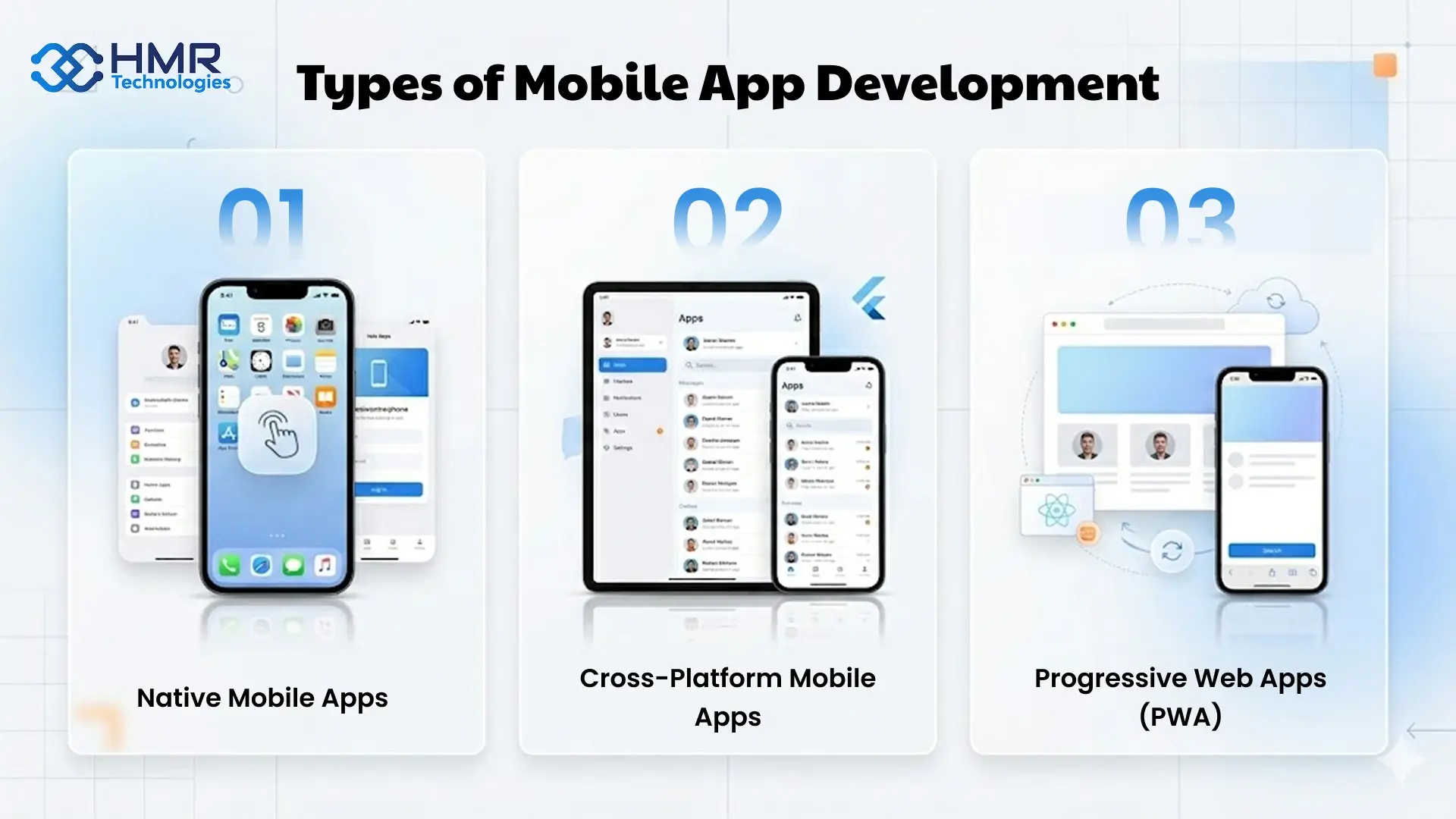
Before starting your project, you must choose the right technology stack. The type of app you build will determine your development budget and the final performance.
1. Native Mobile Apps
Native apps are built for a specific platform, such as iOS app development or Android app development. They offer the fastest performance and the most reliable user experience.
These apps can easily access hardware features like the camera, GPS, and sensors. They are the gold standard for high-performance app development business projects.
2. Cross-Platform Mobile Apps
This is the most popular choice for modern businesses today. We use a single codebase to create apps that work on both iOS and Android simultaneously.
Tools like Flutter development and React Native development make this possible. It is a cost-effective way to reach a 100% mobile audience without doubling your initial investment.
3. Progressive Web Apps (PWA)
A PWA is essentially a website that feels and acts like a mobile app. Users can access it through a browser without downloading anything from an app store.
PWAs are excellent for businesses looking for a quick entry into the market. They are fast, reliable, and work even when the user has a poor internet connection.
Benefits of Mobile App Development for Businesses
Investing in a mobile app can change the way you interact with your target market. Here is why business app development is worth the strategic investment.
Direct Marketing Channel
Push notifications are a game-changer for direct marketing. You can send alerts about sales, events, or new services directly to your customers’ lock screens.
This ensures your message is seen instantly by your audience. Unlike emails that get lost in spam, notifications drive immediate action and engagement.
Building Deep Brand Loyalty
An app makes it easy for customers to engage with your business regularly. You can integrate digital rewards, coupons, or loyalty points that keep them coming back.
This creates a stronger emotional connection with your brand. When a customer has your app installed, they are much less likely to visit a competitor.
Improved Conversion Rates
Mobile apps generally have higher conversion rates than mobile websites. They load faster and securely store user preferences, such as shipping and payment details.
This “one-click” experience removes obstacles during the checkout process. A seamless journey makes it much easier for a customer to complete a purchase.
Increased Brand Awareness
Having your app icon on a user’s phone screen is like having a digital billboard. It provides constant visibility and keeps your brand “top of mind” throughout the day.
The more frequently a user sees your app, the more they trust your brand. This constant presence builds long-term recognition that a simple website cannot achieve.
Data-Driven Insights
You can track exactly how users interact with your app’s features. This data helps you understand what your customers prefer and which services they use the most.
These insights allow you to improve your business based on real facts. It helps you tailor your marketing strategies to match actual user behavior and needs.
Increased Accessibility
An app allows your customers to browse products or book services at any time. It removes the friction of opening a mobile browser or searching for a URL.
Whether they are commuting or relaxing at home, your business is always just one tap away. This level of convenience is what modern customers expect in 2026.
Mobile App Development Process: 5 Simple Steps
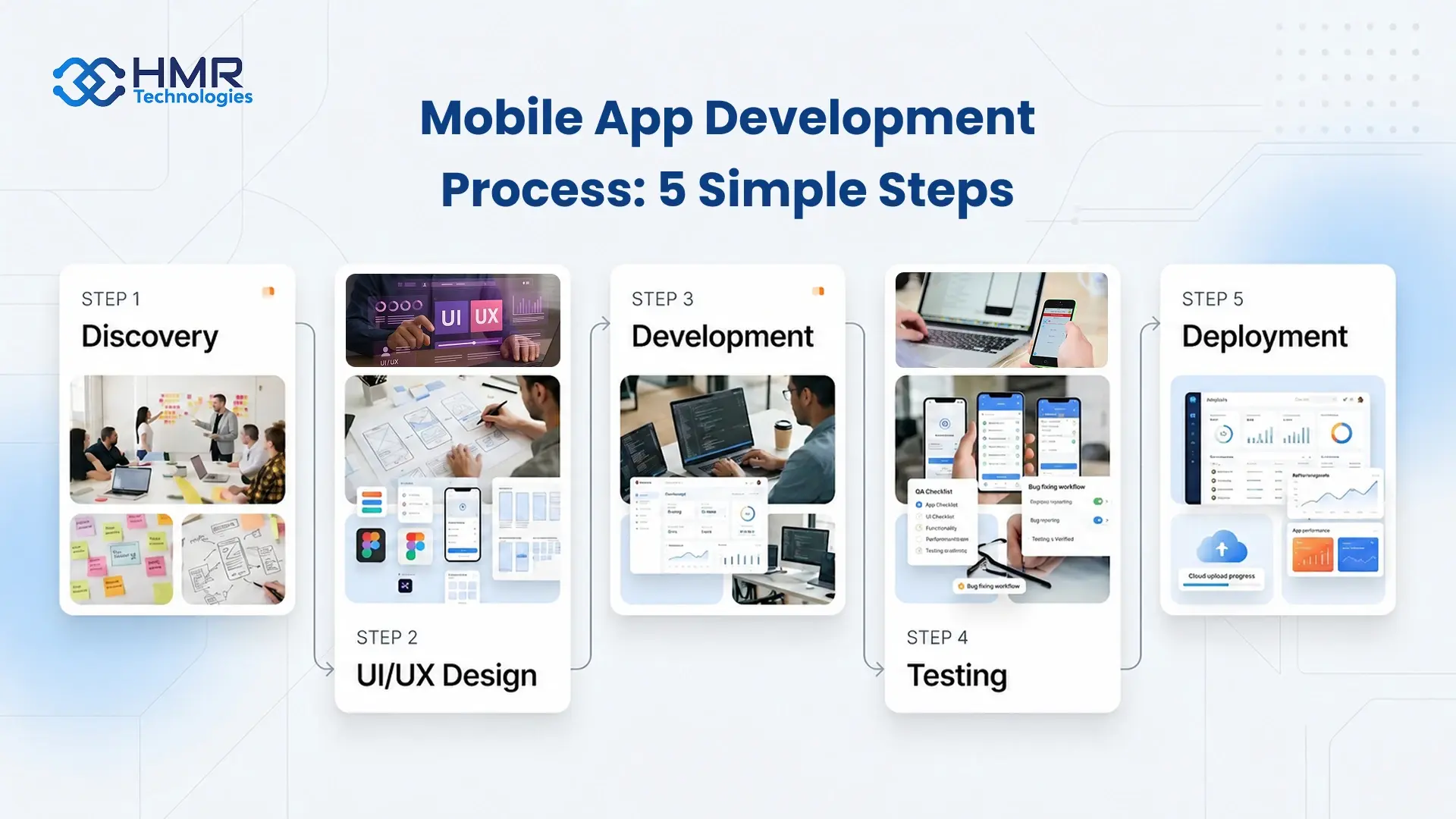
Building an app might seem overwhelming, but at HMR Technologies, we simplify the app development business journey into five manageable stages.
Step 1: Discovery and Strategy
Every successful app starts with a “Why.” We help you define your target audience and the core problem the app will solve. This stage includes market analysis to ensure your app has a unique value proposition.
Step 2: UI/UX Design (The Visual Blueprint)
We design the user experience before writing a single line of code. We create wireframes and high-fidelity mockups. The goal is to make the app so simple that a user doesn’t need instructions to use it.
Step 3: Development and Coding
Our developers bring the design to life. Businesses often choose modern mobile app development platforms to accelerate development and maintain consistent performance across devices.
Step 4: Quality Assurance and Testing
We don’t just check if the app works; we try to break it. Our QA team performs security tests, speed tests, and device compatibility tests. We ensure that your app works perfectly on everything from an iPhone 15 to a budget Android device.
Step 5: Deployment and Marketing
Launching is just the beginning. We handle the technicalities of submitting your app to the Apple App Store and Google Play Store. We also help with App Store Optimization (ASO) so people can actually find your app.
Understanding the Cost of Business App Development
One of the most common questions is: “How much does it cost?” The truth is, custom mobile app development is like building a house—the price depends on the size, features, and location.
-
Complexity Level: A simple app with 5-6 screens will cost significantly less than a complex platform like Uber or Amazon that requires real-time tracking and payment systems.
-
Platform Choice: Building for both iOS and Android simultaneously using cross-platform tools is usually 30-40% cheaper than building two separate native apps.
-
Geographic Location: Hiring a team in the USA or UK is expensive. Many global businesses now partner with experts in India or the Middle East to get high-quality code at a more manageable price point.
-
Maintenance: You need to put aside 15–20% of the original development cost annually for server maintenance, security patches, and upgrades.
Mistakes to Avoid When Developing Mobile Applications
Even with a big budget, many app projects fail because of avoidable mistakes. As a business owner, you should watch out for these traps:
-
Overcomplicating the First Version: Many owners try to add 50 features at once. It is better to launch a “Minimum Viable Product” (MVP) with core features and add more later based on user feedback.
-
Ignoring User Experience (UX): If an app is hard to navigate, users will delete it within 30 seconds. Never sacrifice usability for “fancy” animations.
-
Poor Post-Launch Planning: An app is not a “set it and forget it” project. Without regular updates and customer support, your app will quickly become obsolete and buggy.
-
Selecting the Wrong Partner: Choosing a developer based only on the lowest price often leads to poor code quality and security vulnerabilities that cost more to fix later.
Why HMR Technologies is the Best Partner for Your App
HMR Technologies specializes in helping businesses in the USA, Canada, and Europe navigate digital growth. We don’t just build apps; we create high-performing business assets that deliver a real return on investment.
Our code follows the highest international standards for security and quality. We ensure every project is fully compliant with global data privacy laws like GDPR, keeping your business and users safe from any risk.
We prioritize clear communication in simple English, keeping you updated without using confusing technical jargon. Our apps are built to be scalable, meaning they will perform perfectly as your user base grows from ten to ten thousand.
Conclusion
Mobile app development for businesses is the ultimate way to stay relevant and competitive in 2026. It is an investment that builds trust, loyalty, and long-term revenue.
By following a clear plan and choosing the right technology, you can create a powerful digital asset. This asset will help your team work smarter, and your customers stay happier.
HMR Technologies is here to help you turn your vision into a high-performing reality. Let’s start your digital transformation journey today and build an app that drives real results.



 July 18, 2026
 10 min read