




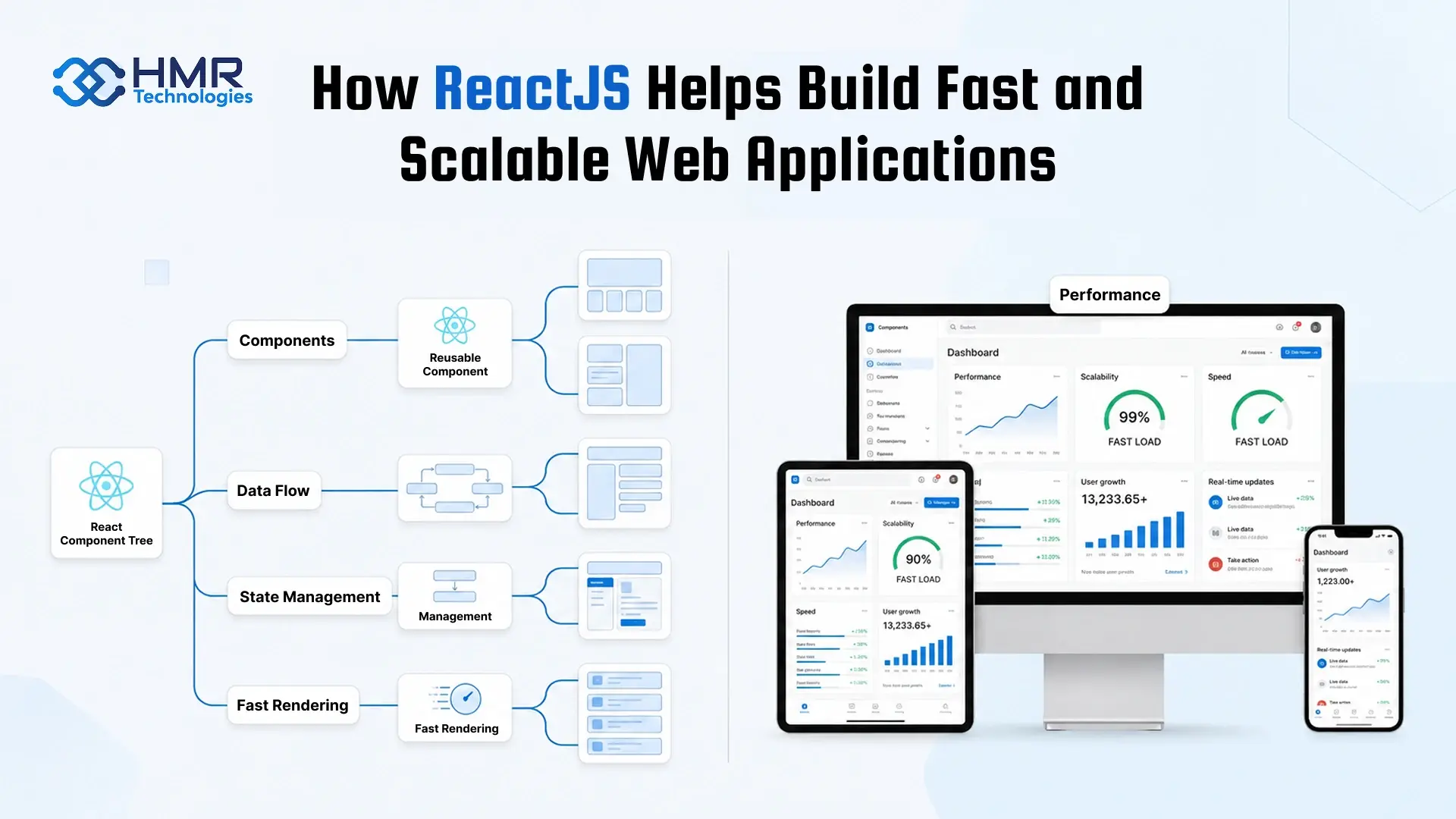
Introduction
Modern businesses operate in a highly competitive digital environment where application performance can directly influence customer satisfaction, engagement, and revenue. Users expect websites and applications to load quickly, respond instantly, and provide seamless experiences across devices.
At the same time, businesses need solutions that can scale as their customer base, data volume, and feature requirements grow.
This is where ReactJS Web Applications have gained significant popularity. ReactJS has become one of the most trusted JavaScript libraries for building modern user interfaces and interactive web applications. Businesses increasingly rely on ReactJS development services to leverage its full potential and create scalable digital solutions.
Its component-based architecture, performance optimization capabilities, and scalability features make it a preferred choice for startups, enterprises, and technology-driven organizations worldwide.
In this blog, we’ll explore how ReactJS helps businesses build fast and scalable web applications and why it remains one of the leading technologies for modern web development.
What Are ReactJS Web Applications?
ReactJS is an open-source JavaScript library developed for building dynamic and interactive user interfaces. Unlike traditional web development approaches that often require full-page refreshes, React enables applications to update content efficiently without disrupting the user experience.
ReactJS Web Applications are web-based solutions built using ReactJS to deliver responsive, high-performing, and user-friendly digital experiences. From SaaS platforms and enterprise software to eCommerce stores and customer portals, React powers many of today’s most successful applications.
The growing adoption of React for Web Development stems from its ability to simplify frontend development while maintaining high performance and scalability. This is one of the reasons React is consistently recognized among the best frameworks for web development. Developers can build reusable components, streamline workflows, and create applications that adapt easily to changing business requirements.
Some common examples of ReactJS applications include:
- SaaS products
- Enterprise dashboards
- Social networking platforms
- Online marketplaces
- Real-time analytics systems
- Customer relationship management platforms
As businesses continue to prioritize digital transformation, ReactJS application development provides a strong foundation for creating future-ready web solutions.
The Three Pillars of Scalable Web Applications

Building scalable applications involves much more than adding new features. A truly scalable solution must maintain performance, support growth, and remain manageable over time. Three key pillars contribute to successful application scalability.
1. Performance
Performance plays a critical role in user satisfaction. Research consistently shows that users abandon websites that load slowly or provide inconsistent experiences.
ReactJS helps improve application performance through efficient rendering techniques and optimized UI updates.
Benefits of Better Performance
- Better user engagement
- Improved conversion rates
- Lower bounce rates
- Enhanced customer satisfaction
For businesses operating in competitive markets, application speed can become a significant differentiator.
2. Maintainability
As applications evolve, maintaining clean and organized code becomes increasingly important. Poorly structured applications often become difficult to update, resulting in higher development costs and slower feature releases.
ReactJS promotes maintainability through its component-based architecture. Developers can isolate functionality into reusable modules, making updates, debugging, and testing significantly easier.
This structured approach helps organizations reduce technical debt while accelerating future development efforts.
3. Scalability
Scalability refers to an application’s ability to accommodate increased workloads, users, and functionality without sacrificing performance.
Modern businesses need applications capable of supporting:
- Growing user bases
- Expanding product offerings
- Increased data processing requirements
- Integration with multiple third-party systems
ReactJS provides the flexibility required to support long-term growth while maintaining a consistent user experience.
Why Do Modern Businesses Demand React Web Application Development?
Businesses across industries increasingly invest in ReactJS web development because it aligns with modern user expectations and business objectives.
One of the primary reasons is user experience. Today’s consumers expect responsive interfaces that provide immediate feedback and smooth interactions. ReactJS allows developers to build highly interactive applications that feel fast and intuitive.
Another major advantage is development efficiency. React’s reusable components enable teams to build applications faster while maintaining consistency across different sections of the product. This reduces development time and helps businesses accelerate time-to-market.
ReactJS also supports flexibility. Organizations can easily integrate React with existing systems, APIs, and backend technologies. Whether a business is modernizing a legacy platform or building a new digital product from scratch, React provides significant adaptability.
Furthermore, React’s extensive ecosystem gives developers access to tools, libraries, and resources that simplify development and enhance application functionality. This flexibility is particularly valuable for organizations adapting to emerging AI enterprise software development trends and evolving digital requirements.
For businesses seeking long-term value, React offers a practical balance between performance, scalability, and development efficiency.
Best Practices for Building Scalable React Apps
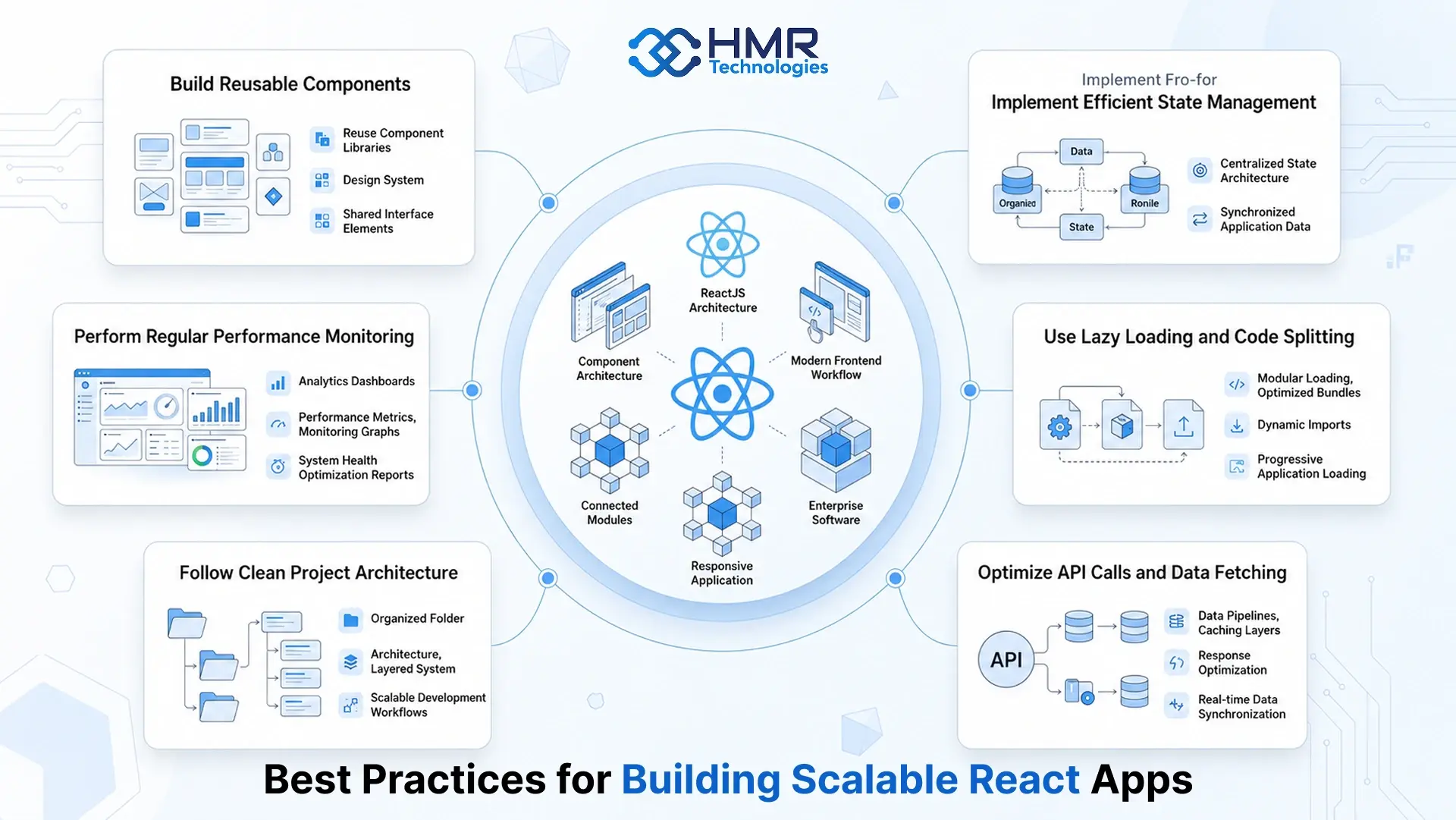
While ReactJS provides powerful capabilities, following proven development practices is essential for maximizing scalability and performance.
Build Reusable Components
Component reusability is one of React’s strongest advantages. Instead of creating duplicate code for similar functionality, developers can build reusable UI components that can be utilized throughout the application.
Benefits
- Faster development cycles
- Improved code consistency
- Easier maintenance
- Reduced development costs
Reusable components help keep applications organized and scalable as projects grow.
Implement Efficient State Management
Managing application data becomes increasingly complex as applications expand.
Efficient state management ensures data remains synchronized across components and user interactions. Solutions such as Context API, Redux, and other state management tools help developers maintain predictable application behavior while improving performance.
Proper state management becomes especially important for enterprise applications handling large volumes of user data.
Use Lazy Loading and Code Splitting
Loading unnecessary resources can negatively impact application performance.
Lazy loading allows applications to load components only when needed. Code splitting further optimizes performance by dividing large bundles into smaller chunks that load on demand.
Benefits
- Faster page load times
- Improved user experience
- Better performance on mobile devices
- Reduced server load
Optimize API Calls and Data Fetching
Applications frequently interact with external APIs and databases. Poorly optimized data requests can create bottlenecks that slow down performance.
Best Practices
- Cache frequently accessed data
- Minimize unnecessary requests
- Implement pagination where appropriate
- Optimize backend responses
Efficient data fetching ensures smoother application performance even as user activity increases.
Follow Clean Project Architecture
A well-structured architecture and reusable components help organizations reduce software product development complexity while improving long-term maintainability.
Development teams should establish clear folder structures, coding standards, and naming conventions from the beginning of the project. This improves collaboration and reduces complexity as applications evolve.
Perform Regular Performance Monitoring
Scalability requires ongoing optimization.
Regular monitoring helps identify performance issues before they impact users.
Key Metrics to Track
- Page load speed
- API response times
- Memory usage
- User interactions
Continuous monitoring enables businesses to maintain high performance while supporting growth.
Key Features That Make ReactJS Ideal for Fast and Scalable Web Applications
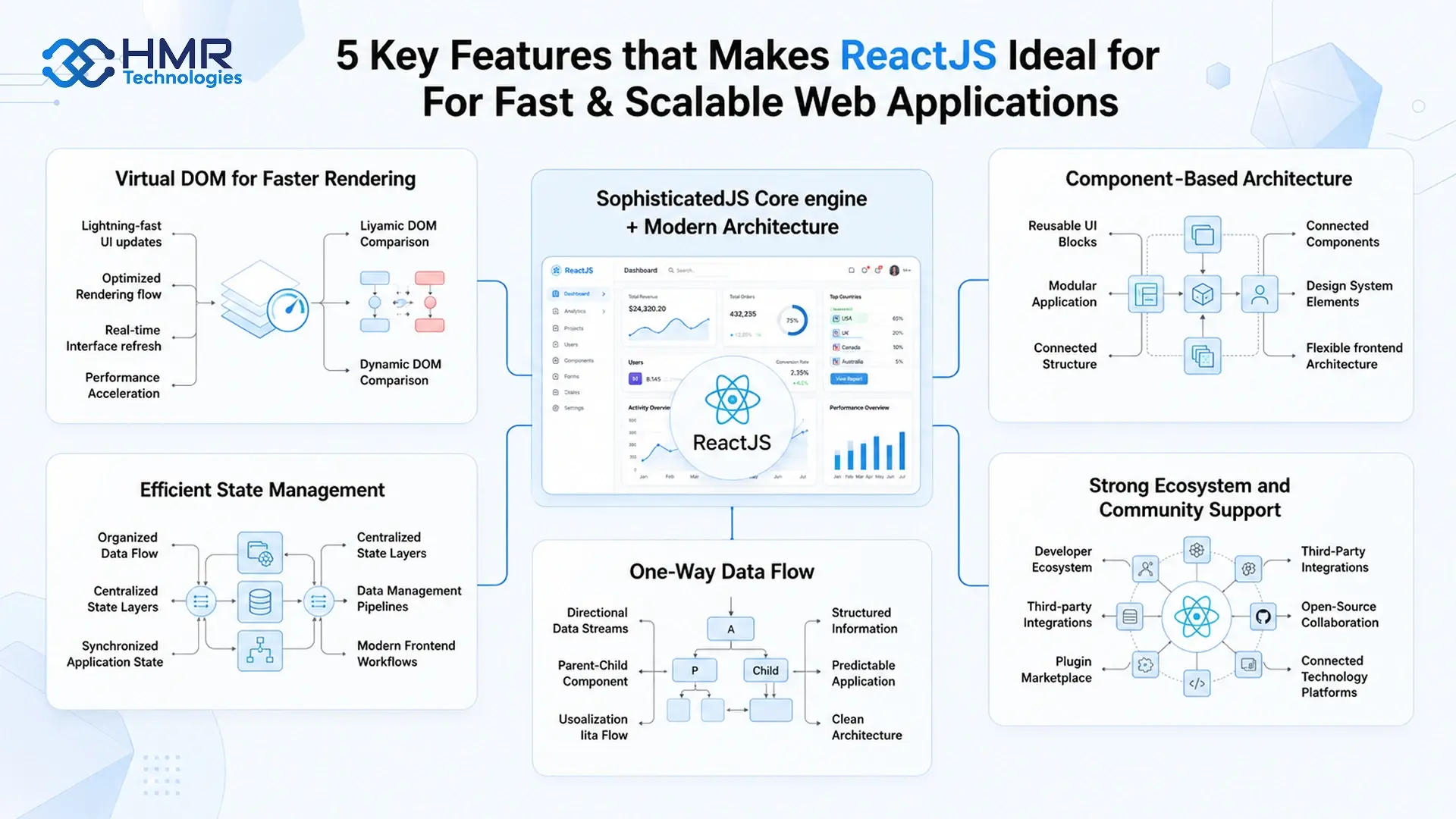
ReactJS offers several unique features that directly contribute to application speed, flexibility, and scalability.
Virtual DOM for Faster Rendering
One of React’s most powerful innovations is the Virtual DOM.
Instead of updating the entire webpage whenever data changes, React creates a virtual representation of the user interface and updates only the affected elements.
Benefits
- Faster updates
- Smoother interactions
- Improved responsiveness
- Better overall user experience
Component-Based Architecture
React applications are built using independent, reusable components.
Each component manages its own functionality and can be combined to create complex user interfaces.
Advantages
- Easier maintenance
- Faster development
- Better code organization
- Improved scalability
Component-based development enables teams to work more efficiently while ensuring consistency across the application.
Efficient State Management
Modern applications often involve complex user interactions and dynamic content.
React’s state management capabilities help maintain data consistency throughout the application. By controlling how information flows between components, React enables developers to build predictable and reliable user experiences.
Efficient state management also improves performance by reducing unnecessary re-renders and optimizing data updates.
One-Way Data Flow
React uses a one-way data flow architecture, meaning data moves in a single direction throughout the application.
Benefits
- Greater control over application behavior
- Easier debugging
- Improved application stability
- Reduced complexity
For large-scale applications, predictable data flow becomes essential for maintaining performance and scalability.
Strong Ecosystem and Community Support
One of React’s greatest strengths is its extensive ecosystem.
Developers have access to thousands of libraries, frameworks, and tools that extend React’s capabilities. Whether building eCommerce platforms, enterprise applications, or SaaS products, teams can leverage existing solutions to accelerate development.
React also benefits from a large global developer community that continuously contributes improvements, resources, and best practices.
This strong ecosystem ensures businesses can confidently invest in React for long-term projects.
Why Choose HMR Technologies for ReactJS Development?
At HMR Technologies, we specialize in delivering ReactJS development services that help businesses build fast, scalable, and user-friendly web applications.
Our experienced developers follow modern ReactJS best practices to create high-performance solutions tailored to your unique business requirements.
What We Deliver
- Fast and responsive user experiences
- Scalable architecture for future growth
- Reusable and maintainable code
- Seamless API and third-party integrations
- Reliable performance across devices and platforms
Whether you’re launching a new product or upgrading an existing application, our team provides end-to-end support from strategy and development to deployment and ongoing maintenance.
With a strong focus on quality, performance, and business outcomes, HMR Technologies is a trusted partner for custom ReactJS development projects.
Conclusion
The demand for fast, responsive, and scalable digital experiences continues to grow across every industry. Businesses need technologies that not only deliver exceptional user experiences today but can also support future growth and evolving customer expectations.
ReactJS Web Applications provide a powerful solution for achieving these goals. Through features such as the Virtual DOM, component-based architecture, efficient state management, and one-way data flow, React enables businesses to build applications that are both high-performing and scalable.
By following proven development practices and leveraging the strengths of ReactJS web development, organizations can create digital products that remain reliable, maintainable, and future-ready.
At HMR Technologies, we specialize in custom ReactJS development solutions designed to help businesses build modern, scalable, and performance-driven web applications. Whether you’re launching a new product, upgrading an existing platform, or expanding your digital capabilities, our experienced development team can help transform your vision into a robust and scalable solution.


 July 18, 2026
 10 min read